What is JSON?

The Most Important Tool of the Internet!
Gaining popularity in the 2000s, JSON is a popular library for transmitting data over the internet. Unlike its legacy competitor (YAML), JSON became very popular in transmitting data between websites using REST frameworks.
However because of its versatility, JSON has become a viable asset when storing data. Although you could use it to store local app data, JSON gave birth to popular NoSQL databases such as MongoDB.
What Makes JSON so Versatile?
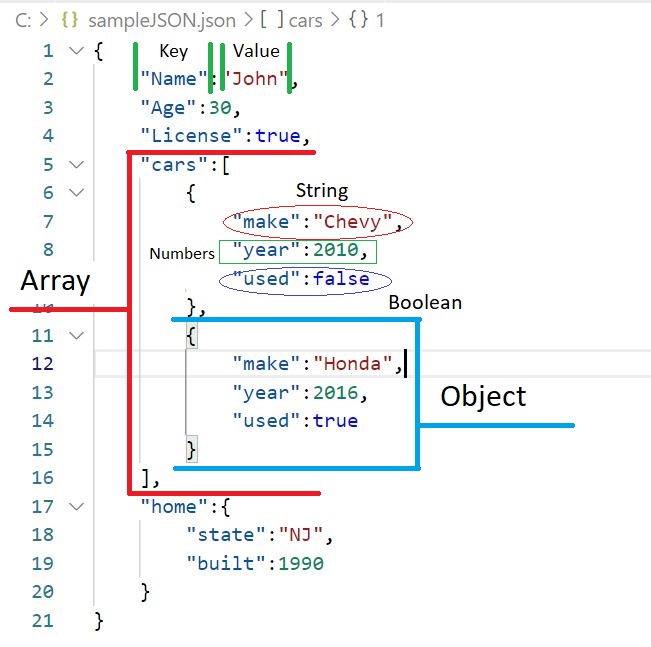
The way that JSON works is that it is based on a "key" and "Value" pair (where "key" is the index meaning you get the result "value" when you provide "key" like a dictionary).
JSON "Values" can be standardized as a String (text), Numbers, and Booleans (True/False). But JSON goes a step further by allowing you to also set "Values" as another JSON Object or even an Array (a list of JSON Objects or Strings, etc).